Break Lease Blues: Why the New Rules Are Hitting Owners Hard
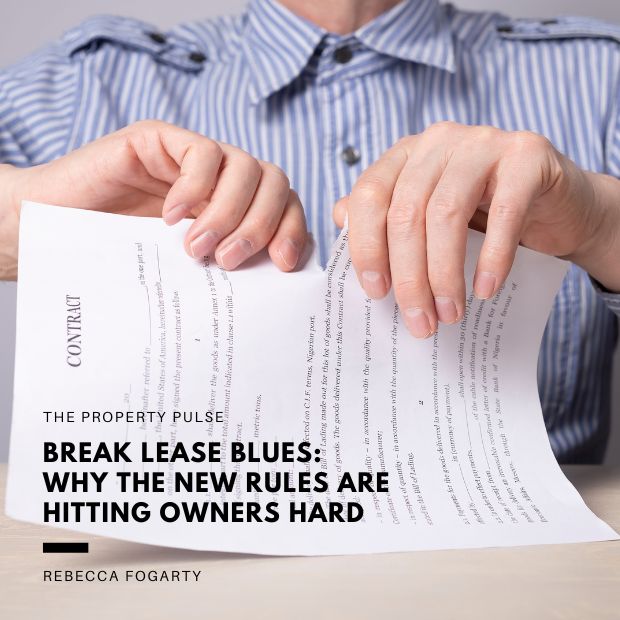
Queensland’s 30 September 2024 break lease reforms were sold as a fairness measure for renters, but for many owners and property managers they have created a costly, high-pressure system that is harder to plan, harder to document, and harder to recover losses from. Under the RTRA Act, the lease is still a legally binding agreement, but the way reletting costs are calculated is now governed by the housing legislation rather than a simple contract-law approach.
The old approach
Before the change, the Act allowed the lessor or agent to seek the reasonable costs incurred in reletting where a tenant broke lease, provided the agreement had a compliant term about reletting costs. The practical effect was that owners could look to the real costs of re-advertising, screening, leasing and related vacancy loss, subject to the duty to mitigate loss.
What changed on 30 September 2024
The new rules cap reletting costs using a statutory formula, and for agreements of up to three years the reletting amount is the lesser of the prescribed reletting costs or the rent until a new tenant moves in. The RTA also states that property managers/owners must mitigate any loss associated with the break lease and should start reletting as soon as practical.
What does this mean?
In real terms, a break lease is no longer a tidy end date that can be planned into a portfolio calendar. Tenants can hand back keys with very little notice, and the handover of keys is the trigger for the vacate process, which means owners and agents can be forced to inspect, document, quote, invoice, communicate, advertise, and relet in an extremely compressed timeframe.
A vacate inspection is not just a walk-through. It is the evidence-gathering step that supports the exit condition report, the bond claim, and any argument about cleaning, carpets, pest control, repairs, or other tenant obligations. There are strict timeframes around this and are not flexible even if not notice is provided.
Queensland Government has also tightened the evidence timeline for bond claims. For bonds lodged on or after 30 September 2024, supporting evidence must be provided to the tenant within 14 days of lodging a claim or dispute, and the RTA says failing to provide that evidence is an offence with a maximum penalty of 20 penalty units.
That means the clock starts fast: if the tenant leaves the property in poor condition, the owner or agent needs photos, invoices, quotes, cleaning reports, and all supporting documents gathered quickly, or the bond recovery process becomes much harder. With the restriction of tradies available, and the reluctance of them to complete minor quotes, the pressure of meeting this timeframe is enormous.
Why this creates so much pressure
The biggest problem is timing. When a tenant breaks lease without warning, you often lose the opportunity to give the normal 30-day end-of-tenancy guidance, refer them to cleaners and trades, and work through the exit process in an orderly way. Instead, the property may become vacant immediately, forcing the agency to mitigate loss while simultaneously completing the vacate inspection, preparing the evidence package, and launching the relet campaign.
That is why many property managers feel the fixed-term lease is increasingly acting like a periodic agreement that ends whenever the tenant chooses. The law still requires compliance by both sides, but the practical burden has shifted sharply onto owners and agencies.
In our agency, break leases have more than doubled, that is a significant operational and financial change. While we are still waiting on agency wide statistics, the RTA has acknowledged sector feedback about increased break leases and confusion around reletting costs in its stakeholder discussions.
A practical reality
For owners, the frustration is understandable: the lease no longer feels like a stable commitment when early exit is easier, cheaper, and more common. Tenants are effectively resigning a lease, then continue looking for their ideal property and just simply break their lease. When owners have this happen more than twice a year, the costs of reletting starts to mount up.
For property managers, the law now demands faster turnaround, stronger evidence, tighter admin, and more communication than ever before.
The good news is that the REIQ are taking steps to meet with the stakeholders – the RTA and the QLD Government to relay the issues we are seeing on the ground, complete with the data gathered from several agencies across QLD including Blackbird and Finch.
We look forward to meeting with them at the REIQ Chapter meeting in May 2026.