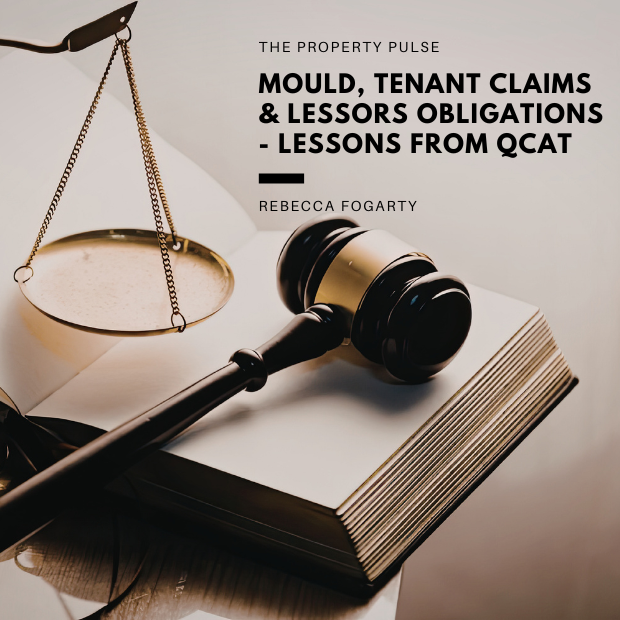
QCAT decision (Emmert v Rolfe & Anor QCAT 502) offers useful guidance on mould, tenant health concerns and when a landlord is, and is not, responsible.
Lessor obligations under the RTRA Act
Sections 185 and 188 of the Residential Tenancies and Rooming Accommodation Act 2008 (Qld) set out the core obligations:
-
Lessors must ensure the premises are clean, fit to live in and in a reasonable state of repair at the start and maintain them in that condition during the tenancy.
-
Tenants must keep the premises clean and must not intentionally or negligently damage the property.
REIQ best practice reinforces that lessors should respond promptly to repair and health/safety issues (including mould), keep clear records and use appropriately qualified contractors.
What happened with the mould claim
In this case, the tenant claimed $25,000 for mould damage to belongings and raised multiple issues about habitability and health. QCAT examined:
-
Timing: mould was first reported in early January 2025, and a report later showed extensive mould, after the tenants had already lived in the property for around one to two months.
-
Response: the agent arranged mould remediation for 28 February 2025 and sought advice on proposed treatment and timeframes. The Tribunal described this response as reasonable and timely in the circumstances.
-
Context: the period coincided with heavy rainfall on the Sunshine Coast, and QCAT had seen multiple mould claims from similar weather events.
QCAT concluded there was no reliable evidence that the landlord’s premises or any failure by the landlord caused the mould or the alleged damage to the tenant’s possessions. The tenant’s claim was dismissed in full.
Tenant contribution and health vulnerabilities
The Tribunal also found:
-
The tenants stored items in dark, confined spaces and brought possessions and cleaning equipment from a prior tenancy where mould had been a known issue.
-
The male tenant had pre‑existing health conditions, but there was no evidence that the landlord had been told in a way that would require special conditions or additional obligations.
QCAT stated that lessors must comply with the Act for an “average” occupant and are not obliged to guarantee suitability for particular health sensitivities unless they are informed and agree to special arrangements. This is in line with REIQ guidance that landlords must meet minimum standards and legal obligations but are not insurers for every individual risk.
Practical guidance for landlords
From our perspective as property managers:
-
Treat mould reports as urgent repairs in line with sections 185 and 216–218 RTRA: acknowledge promptly, investigate, and arrange appropriate treatment as soon as reasonably practicable.
-
Document all steps taken (emails, work orders, contractor reports) to demonstrate that you acted reasonably and in accordance with REIQ best practice.
-
If tenants have specific health vulnerabilities, encourage them to raise these before or at the start of the tenancy so that suitability and any necessary conditions can be discussed.
This decision confirms that where landlords and agents act quickly, reasonably and in line with the RTRA Act and REIQ guidelines, QCAT will not automatically hold them liable for mould or tenant losses, even where mould is present.